Introduction
In today’s data-driven world, organizations often emphasize the need to make decisions backed by data. We hear terms like “data-driven decision-making” and “let the numbers speak for themselves.” While data is undeniably crucial, the notion of purely data-only decisions is a myth. Every decision, no matter how analytical, involves human judgment, context, and interpretation. In fact, data serves as a way to calibrate our gut feelings rather than replace them.
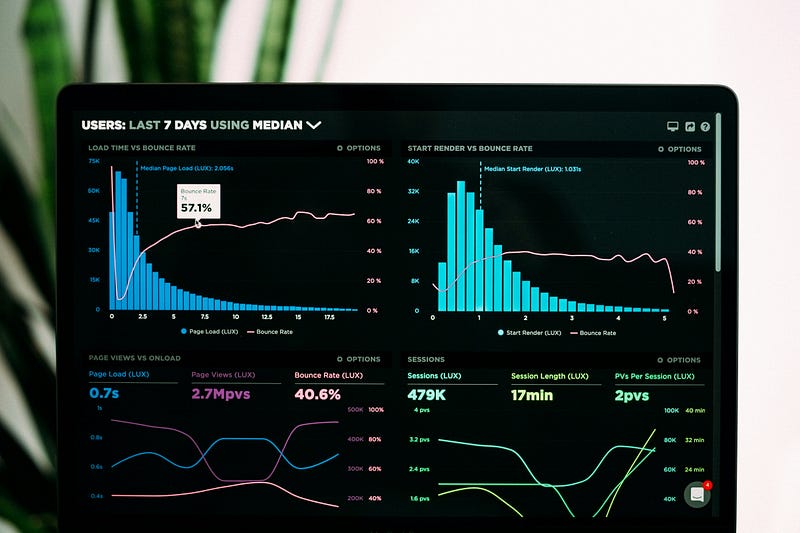
Photo by Luke Chesser on Unsplash
The Role of Data
Data provides insights, trends, and facts that can help identify problems, evaluate opportunities, and predict outcomes. In modern business, data is integral to optimizing processes, reducing uncertainty, and guiding investments. Without data, decision-makers would operate in a vacuum of assumptions and guesswork.
- Data as a guide: Data offers a map, highlighting possible paths and outcomes. For example, in a sales department, data might suggest focusing on a specific customer segment based on historical buying behavior.
- The illusion of objectivity: Data is often seen as objective. After all, numbers don’t lie, right? However, while data itself is neutral, its collection, interpretation, and usage are influenced by subjective human biases
- Calibrating gut feelings: Data doesn’t replace instinct — it enhances it. Knowledge-workers often rely on their gut when making decisions, but data can help refine or validate that intuition. For example, if your instinct tells you a new market is promising, data can either support that feeling or caution you to reconsider certain risks. Rather than being at odds, data and intuition work together.
The Human Element
No decision is made in a vacuum. Even when data is available, how it is interpreted and applied is influenced by human factors like emotions, experience, intuition, and external pressures.
- Context matters: Numbers are never divorced from their context. Data about market trends, for example, must be considered within the broader social, political, and economic environment. Contextual nuances — such as company culture, customer relationships, or market volatility — impact decisions.
- Bias and interpretation: Human biases influence how data is interpreted. Confirmation bias, availability bias, and anchoring can skew how we view data. For instance, a knowledge-worker might cherry-pick data that aligns with their pre-existing beliefs or preferences.
- Risk tolerance and ethics: Decisions are shaped by personal and organizational risk tolerance, as well as ethical considerations. A company might have data suggesting layoffs would increase profitability, but workers may decide against it due to the negative impact on employees and public perception. Here, ethical and emotional judgments interplay with data-driven insights.
Data as a Compass for Intuition
While gut feeling can be an invaluable decision-making tool, it is prone to being swayed by personal experiences, biases, or emotional responses. Data serves as a compass, ensuring that instinctual decisions are grounded in reality.
- Balancing instinct with facts: Experienced knowledge-workers often make decisions based on patterns they’ve internalized over the years. They may sense when a business opportunity “feels right,” but data helps to frame that feeling in a broader, more structured context. When intuition and data align, it provides powerful confidence to move forward. When they don’t, it offers a moment to pause and reconsider.
- Avoiding blind spots: Sometimes, our instincts can be wrong — perhaps because we’re too close to the problem or overly optimistic. Data provides an external check that can reveal blind spots, giving knowledge-workers the chance to recalibrate their feelings before taking action.
The Interplay of Data and Judgment
Data is one part of a decision-making framework that also includes:
- Experience and intuition: Experienced knowledge-workers often make decisions that defy data predictions, relying on intuition and pattern recognition. For example, in product development, data might suggest a specific direction, but a worker might use their gut to tweak the approach based on past experience.
- Stakeholder input: Data doesn’t always capture the human elements of business, such as customer needs, employee morale, or investor expectations. Stakeholders’ insights can shape or alter a data-based course of action.
- Time and urgency: Decision-makers often face tight deadlines where not all data can be gathered or analyzed. In such cases, decisions may be driven by a combination of partial data and gut feelings or external demands.
Real-World Examples
- Product Development Decisions: Product development is an ongoing, iterative process where continuous delivery plays a critical role. When teams release features frequently, they’re able to collect real-time feedback from users, allowing them to gather data and adjust their strategy. For example, in software development, a company might feel confident that users will love a new feature based on past feedback or intuition, but after releasing it in a small update (continuous delivery), data shows that users aren’t adopting it as expected. Instead of committing fully to a gut-driven decision or early data, the development team adjusts by analyzing usage data, revisiting user feedback, and tweaking the product. This process of releasing, learning, and iterating not only refines the product but continuously calibrates gut feelings with real-time insights. Why Continuous Delivery Matters: Continuous delivery allows teams to course-correct quickly. Decisions about what to build next or how to improve an existing feature are based on live user data, not just assumptions. This minimizes risks and ensures that gut instincts are balanced with actual user behavior and preferences, preventing large, costly mistakes.
- Continuous Improvement of a Business: Continuous improvement is a core principle in many successful businesses, especially in industries like manufacturing, retail, and service delivery. Take, for instance, a retailer who feels their current supply chain is optimal because it’s been working well for years. However, after reviewing real-time logistics data, they might notice inefficiencies — longer lead times, higher costs, or delays. By introducing incremental changes (lean or agile principles), the retailer can test improvements such as optimizing routes, adjusting inventory levels, or renegotiating with suppliers. Over time, they gather data on which changes have the most significant impact and fine-tune their strategy. This allows them to continuously learn and refine their gut sense of what’s best for the business. Why Continuous Improvement Matters: As businesses operate in ever-evolving markets, relying solely on past successes or gut feelings can leave them behind. Continuous improvement enables businesses to adjust their strategies based on up-to-date data while still allowing room for workers’ intuition. It’s a cyclical process: test, learn, improve, and repeat — always keeping gut feelings grounded in actual performance.
To Sum It All Up
While data is indispensable in modern decision-making, it can never fully replace the human judgment, intuition, and context that shape the final choice. Decisions are rarely as simple as the numbers suggest. Ultimately, data informs and calibrates decisions, but knowledge-workers or AIs make them. Understanding this interplay helps workers avoid over-reliance on numbers and embrace a more holistic approach to decision-making.